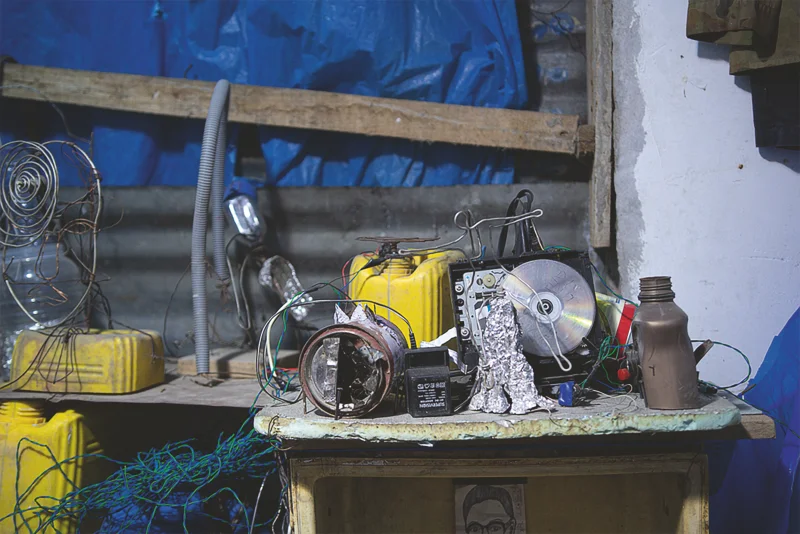
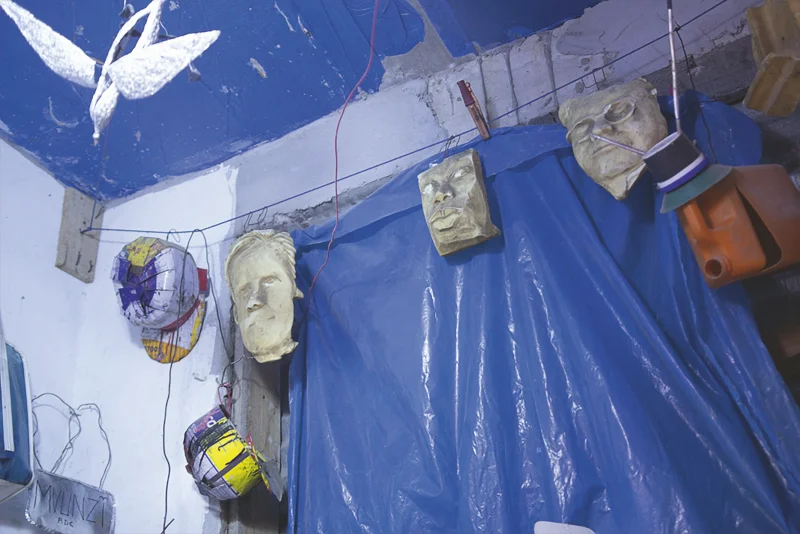
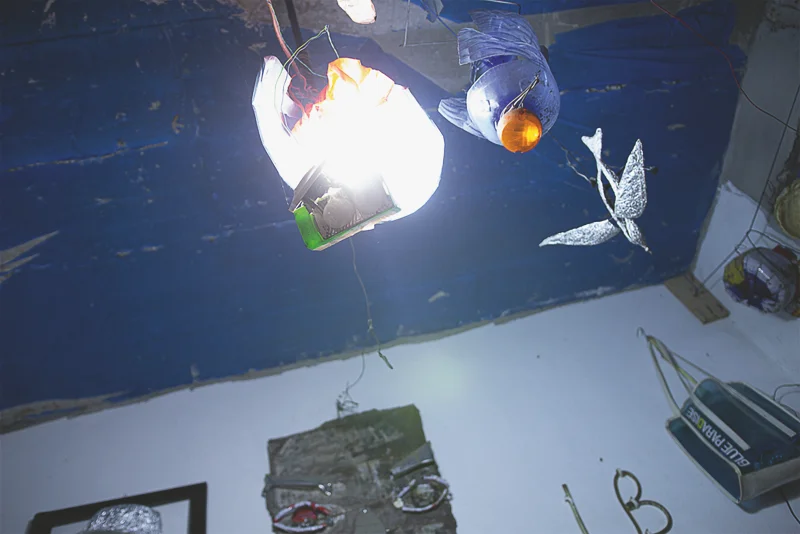
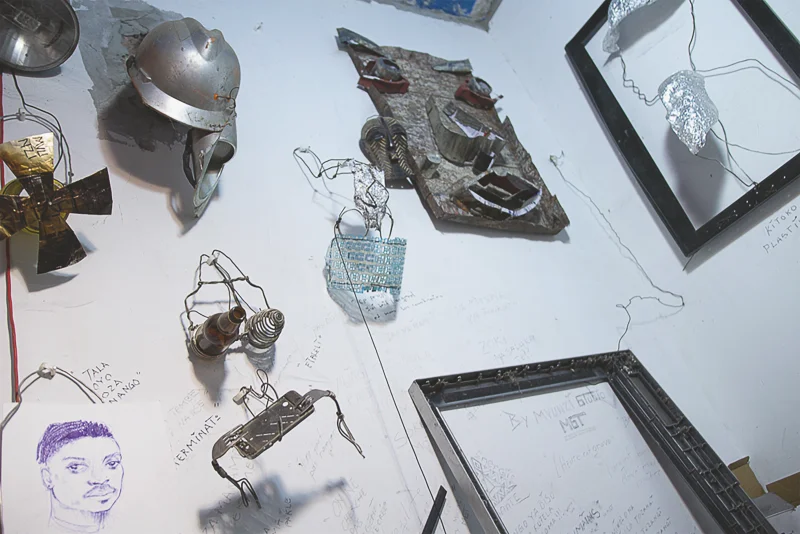
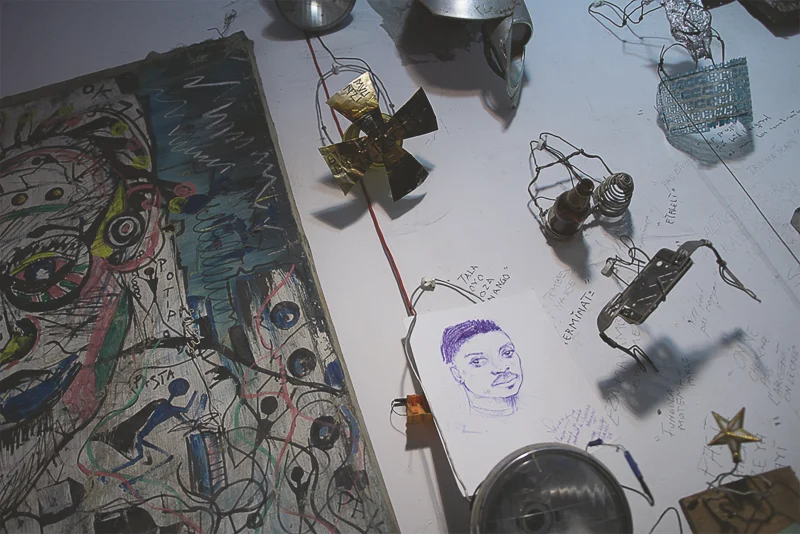
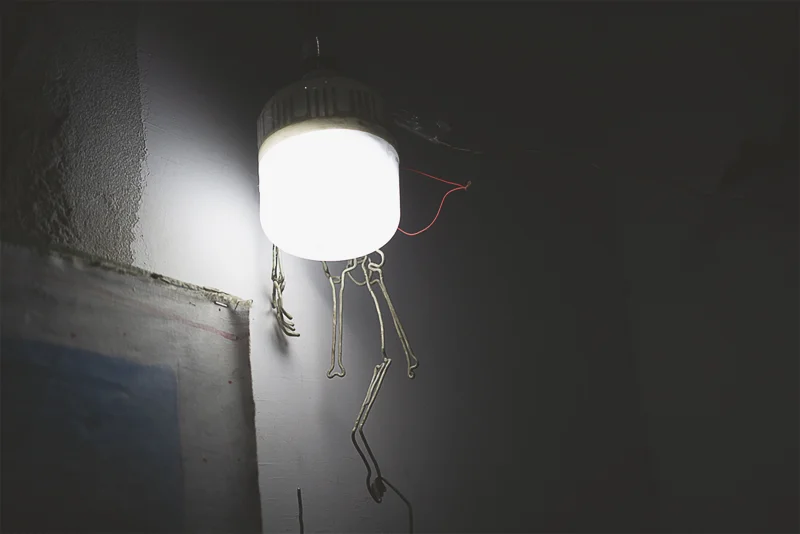
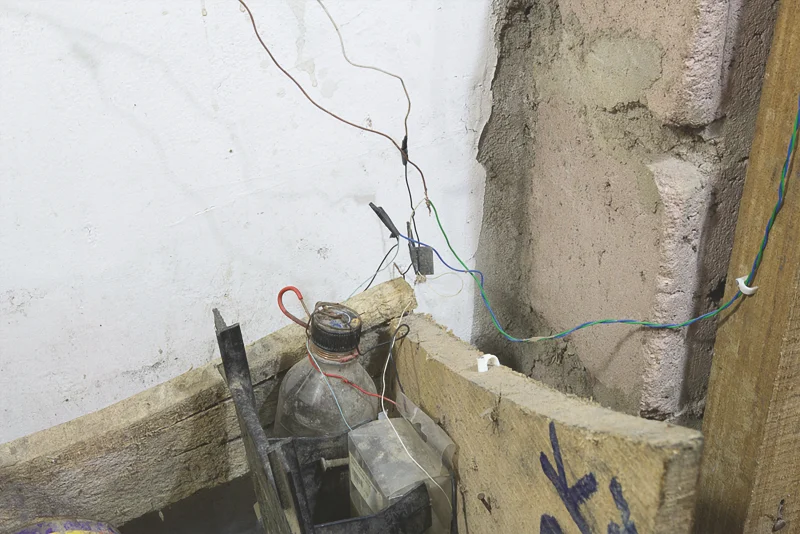
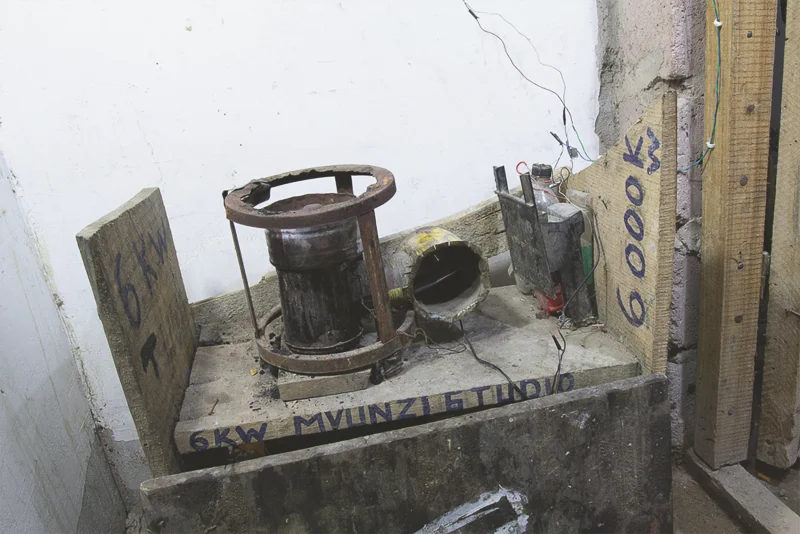
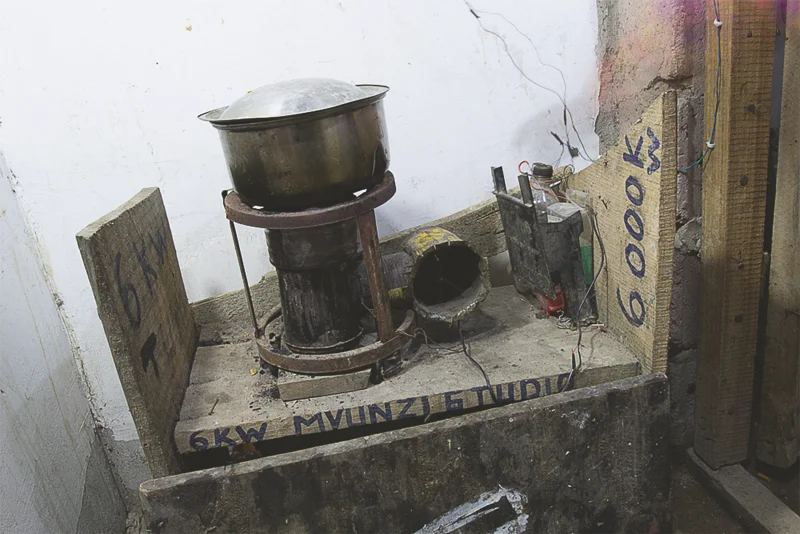
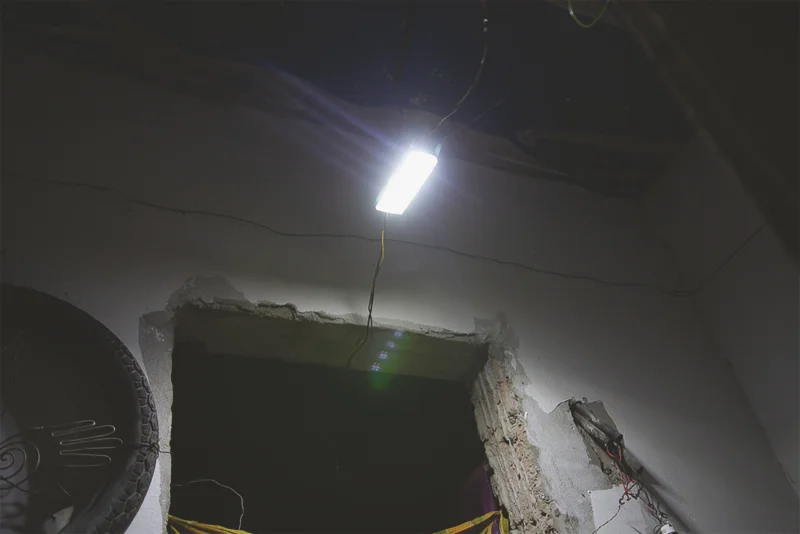
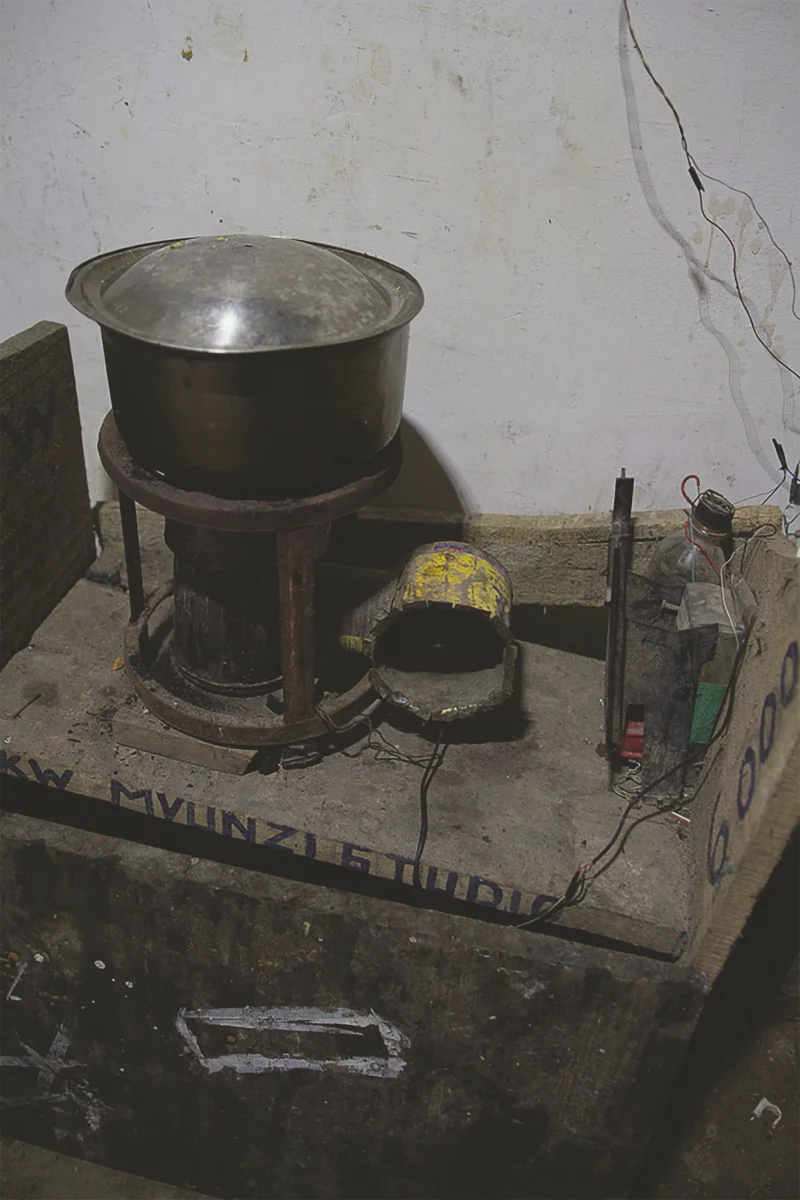
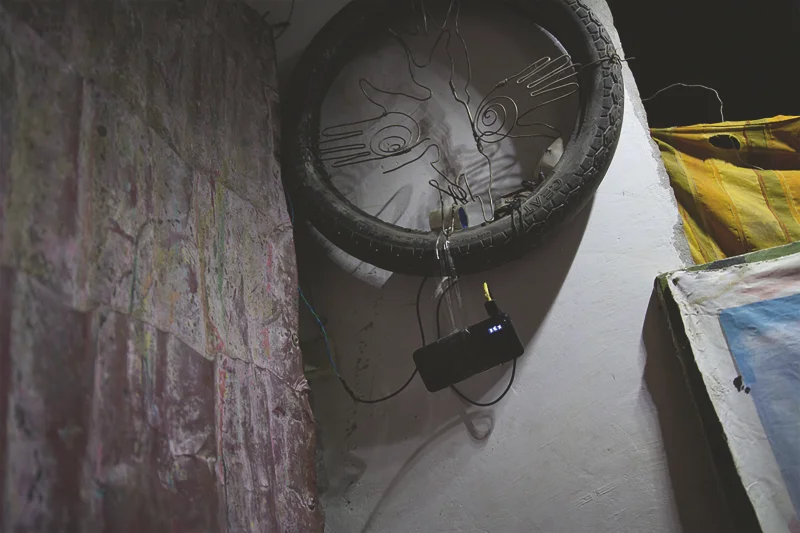
The photographs show Junior Mvunzi’s living and working space in Kinshasa. The artist has set up an electrical circuit that doesn’t depend on the city’s power grid, allowing him to avoid the frequent power outages. Each room has a switch to control a 5V circuit, which is powered by solar panels and, when needed, power banks. It powers LED lights in several rooms as well as a fan that increases airflow to a stove, allowing for shorter cooking times and more efficient use of available resources, such as charcoal.
His system relies on two resources that are abundant in the Democratic Republic of the Congo: the sun and the rare metals used in lithium batteries. Despite the abundance of these resources, the people of the DRC do not benefit from them directly. Harnessing the sun requires solar panels, but they are not produced locally. Storing energy requires batteries, but the raw materials are sent somewhere else for processing, only to return to the Congo as power banks, other gadgets, or trash. Mvunzi’s circuit thus operates on two levels: as a proposed solution for everyday life that takes local possibilities into consideration, while at the same time showing how impossible it is to make direct use of these possibilities due to a global market based on individual profit rather than common well-being.